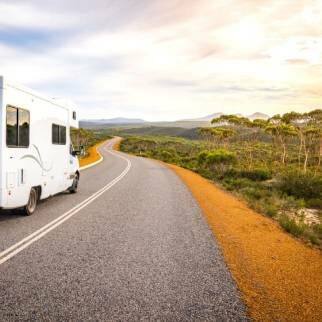
Australia has some fantastic places to explore beyond the main highways, and hiring a 4WD camper in Australia – also called a 4×4 camper – is a popular option for adventurous Gallivanters. Remote tracks, outback campsites and the freedom to explore places that aren’t accessible in a standard campervan can make for a wonderful Australian adventure.
But before booking a 4WD camper, it’s worth looking at where you actually want to go. A 2WD motorhome can take you to many parts of Australia, including some fairly remote regions.
There are also some big differences between the vehicles themselves, particularly when it comes to equipment, living space and how you’ll spend your time in camp.
What’s the difference between a 4WD camper and a 2WD campervan?
The biggest difference is the type of roads they’re designed to handle. 2WD or what some refer to as ‘standard’ campervans and motorhomes and are intended for sealed roads. Whereas, you’ll find 4WD campers are equipped to travel on a wider range of unsealed roads and 4WD tracks (subject to our partners’ terms and conditions).
Depending on the vehicle, 4WD campers may have higher ground clearance, upgraded suspension, all-terrain tyres and additional equipment for travelling through more remote areas. There are also some important differences in how the vehicles are set up for living and camping.
4WD campers are designed around outdoor living. You might have a rooftop tent to set up each evening or some will have sleeping inside the cabin to save climbing up a ladder. They all tend to have some sort kitchen that slides out from the side or rear of the vehicle, and camping equipment stored in purpose-built compartments.
In our standard 2WD campervans and motorhomes, you’ll have a kitchen, dining area and beds inside, along with a shower and toilet in some models. After a day of exploring, for some travellers, they prefer the ease of being able to kick off shoes, sit inside and put the kettle on easily. The extra comfort outweighs the ability to explore further off the beaten track.
For our more adventurous Gallivanters, that’s exactly what they love about 4WD camping. Sitting under the stars with a cuppa, listening to the sounds of the night after spending the day exploring is perfect.
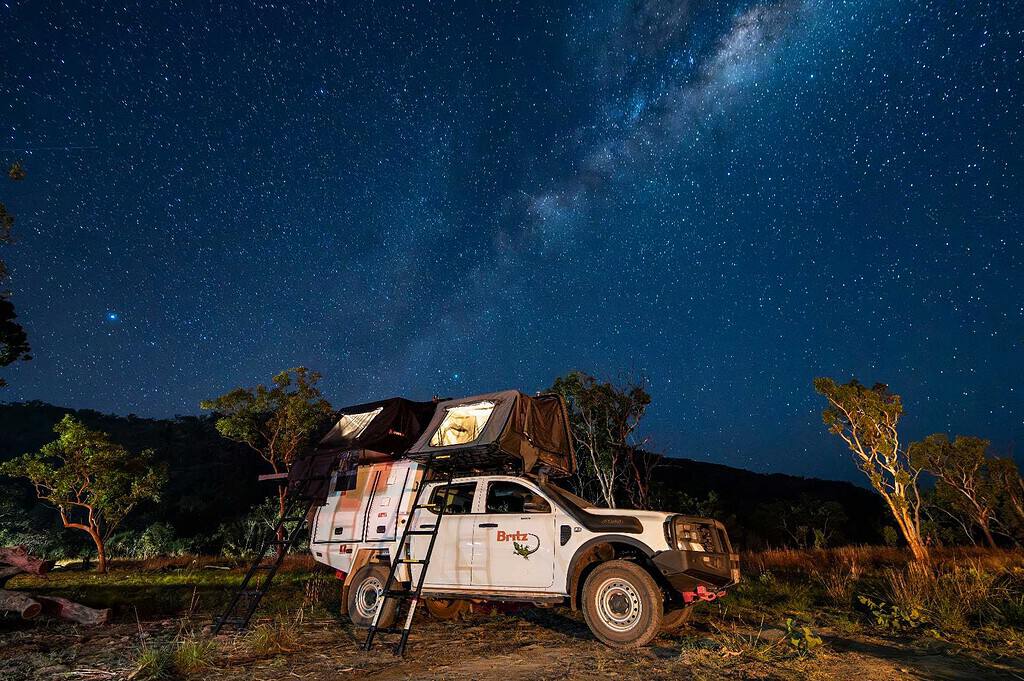
You can explore the different 4WD camper hire options available through Gallivanting Oz to get a better idea of the camping setups and facilities available.
What’s included in a 4×4 camper hire in Australia?
All 4WD campers come equipped with the essentials you’ll need for camping, including sleeping equipment, cooking facilities, a fridge, water storage, crockery and cooking utensils. Camping equipment such as an awning, outdoor table and chairs is also commonly included, although the exact setup varies by vehicle.
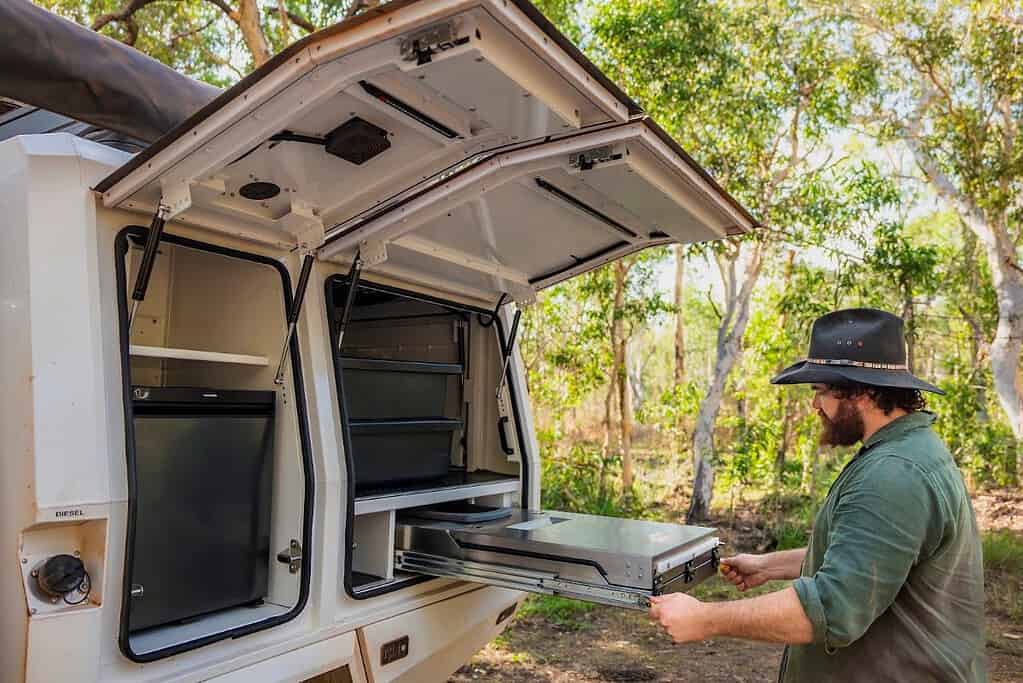
Layouts vary between vehicles, particularly when it comes to sleeping arrangements, indoor seating and kitchen access. These differences can have a big impact on how comfortably you camp. Alongside the layout, it’s worth considering which roads and tracks each vehicle is suited to and permitted to travel on, from easier unsealed roads to rougher 4WD tracks.
Some 4WD campers also come with more specialised equipment for remote travel, including tyre inflation equipment, recovery gear and emergency communication devices. The level of equipment varies, so we’ll always look at what’s included in the particular vehicle you’re considering.
The biggest difference from hiring a standard 2WD campervan isn’t simply the equipment supplied. It’s the type of travel the vehicle is designed for, the roads you’re permitted to explore and the camping experience you’ll have along the way.
Do you need a 4WD camper to travel around Australia?
That really depends on the type of Australian road trip you have in mind and the places you’d like to explore. You can circumnavigate all the way around Australia on a sealed road. Of course there are plenty of different roads to explore though, with some sealed and some not.
Some people are specifically looking for a 4WD adventure, with remote tracks and camping away from the main highways forming a big part of their holiday. Others are planning a road trip around Australia and aren’t sure whether the places they want to visit will require a 4WD.
We often receive enquiries from people planning to drive from Darwin to Perth who assume they’ll need a 4WD camper for the entire journey.
It’s understandable when you consider the distances involved and how remote some of these regions are. However, the main route follows sealed highways, and many of the towns and popular attractions along the way are accessible in a 2WD motorhome.
There are certainly places that require 4WD access, but you might find these only make up a small part of your overall itinerary.
For those clients who only have a couple of 4WD-only attractions on their itinerary, we often suggest considering a 2WD motorhome and joining organised 4WD tours to reach those more remote locations.
This way, you can enjoy the comfort of a 2WD motorhome for the majority of your holiday, while experienced local guides take care of the off-road driving. Depending on your itinerary, it can also work out considerably more cost-effective. Also, a great option if you’re not confident tackling unfamiliar tracks yourself.
If the seasonal Gibb River Road in the Kimberley region was on the bucket list though – you’d need to hire a 4WD camper, rather than a standard 2WD campervan.
Many of Australia’s national parks can be explored in a 2WD motorhome, although some attractions and campgrounds require a 4WD. Our guide to exploring Australia’s national parks by motorhome or 4WD can help you work out which type of vehicle best suits the places you’d like to visit.
When is a 4WD camper the better choice?
If exploring remote Australia is a big part of your holiday plans, a 4WD camper opens up a different kind of road trip. You can venture beyond the sealed highways onto permitted unsealed roads and tracks, reaching places that aren’t accessible in a 2WD motorhome.
For many of our clients, the appeal is visiting outback stations, exploring remote gorges and camping well away from the main tourist routes.
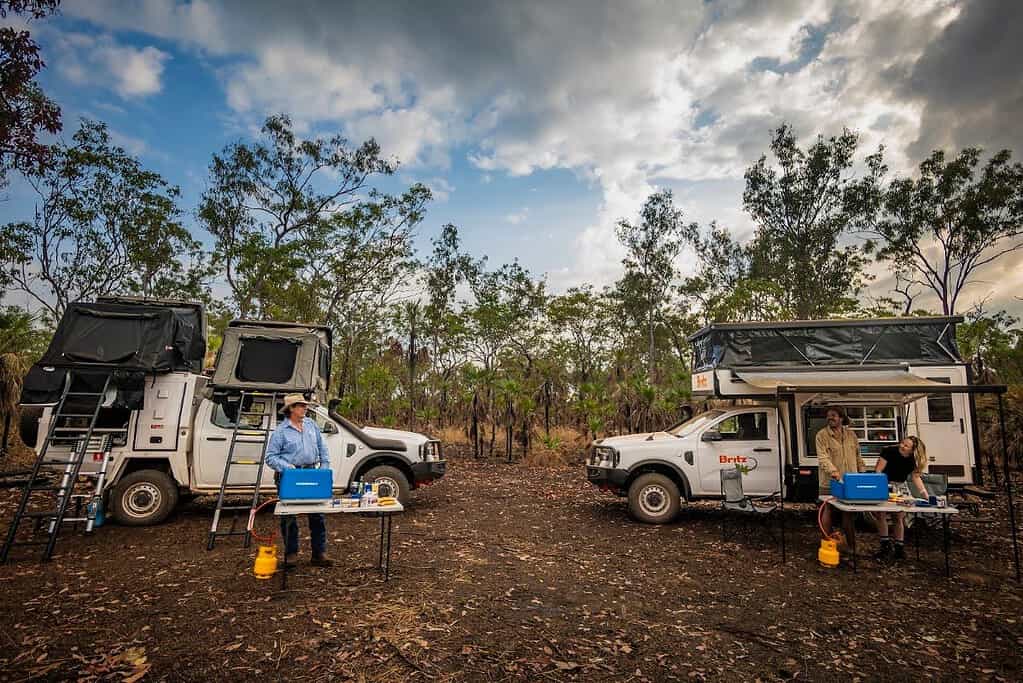
If you’ve already got a few places in mind, let us know where you’re hoping to travel. We can talk you through the different 4WD camper options and help you find one suitable for your planned route.
Can you drive a 2WD campervan on unsealed roads?
Generally, no. Our 2WD campervans and motorhomes must stay on sealed roads. However, our partners allow limited exceptions for short, well-maintained unsealed access roads leading to recognised commercial campgrounds or major tourist attractions. The permitted distance is generally around 10–12 km, depending on the vehicle.
This doesn’t mean you can drive on any unsealed road simply because it looks suitable. The road, destination and distance must meet the hire conditions, as rough or heavily corrugated surfaces can cause damage to a 2WD motorhome even over relatively short distances.
It’s always best to check before you go. If there’s somewhere you’d particularly like to visit and you’re unsure whether the road is permitted, let us know. We can help you check the conditions for your chosen hire vehicle.
Does hiring a 4WD mean you can drive anywhere?
Hiring a 4WD camper certainly gives you access to more of Australia’s remote roads and tracks, but it doesn’t mean every route is open to hire vehicles.
Some remote routes require approval from our partners, while others may be prohibited altogether. Beaches, river crossings and particularly challenging tracks can also have restrictions, regardless of the vehicle’s capabilities.
If you’ve got a particular route in mind, let us know. We can help you understand which roads are permitted and find a suitable 4WD camper for the places you’d like to explore.
Which 4WD camper is the most comfortable?
When comparing 4WD campers, it’s worth looking closely at the camping layout. How you get into bed, where you can sit and how much you need to set up each evening can make a big difference to your holiday.
Some options have rooftop tents, which means climbing a ladder to bed and spending most of your time outside. That might suit you perfectly, but think about how you’d feel getting up during the night or climbing in and out every day for several weeks.
Other campers have an enclosed living area with somewhere to sit inside. Having a sheltered spot for a cuppa, a read or a game of cards can be particularly welcome when it’s windy, wet or the insects are out.
For a longer trip along the Gibb River Road travelling from Darwin to Broome (and beyond), we often find the option such as the Apollo Adventure Camper and is most popular with our 50+ aged clients. It’s a more comfortable camping layout, including an internal table and seating. It’s about how you’ll enjoy living in the camper throughout your trip.
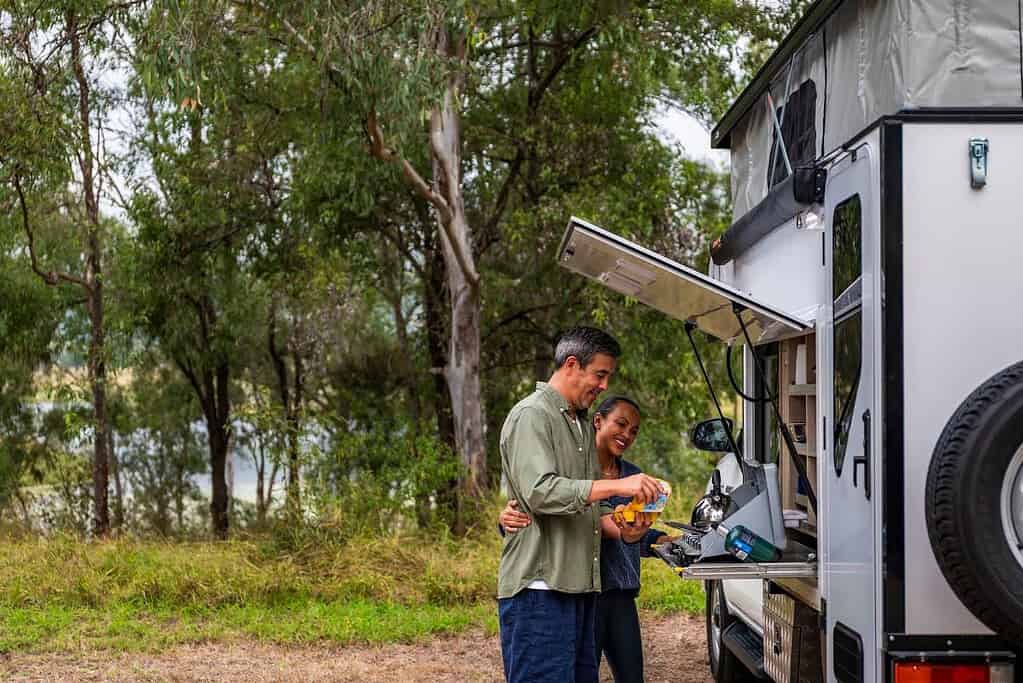
Tell us a little about your plans and what matters to you – whether that’s avoiding a ladder, having somewhere to sit inside or keeping daily setup simple. We can talk you through the layouts and check which vehicles are permitted on your planned route before you book.
When and where can you hire a 4WD camper in Australia?
4WD camper availability is quite different from 2WD motorhome hire, particularly during the Australian winter.
The northern dry season, generally from May to October, is the busiest time for 4WD travel through the Northern Territory and northern Western Australia. During these months, hire companies position much of their 4WD fleet in the north to meet demand. This can leave travellers wanting to collect a 4WD camper in cities such as Sydney or Adelaide with fewer options.
Outside the northern peak season, some 4WD campers become available from southern locations, although this varies between our partners.
Another important consideration is the seasonal closure of northern hire depots. Our partners tend to close their Darwin, Broome and Alice Springs depots from December through to the end of March. If you’re planning to collect or return a camper at one of these locations, your travel dates will need to work around the applicable depot opening dates.
By comparison, our 2WD motorhomes are available year-round from a much wider range of hire locations, including Perth, Cairns and Brisbane, as well as the southern cities.
If you’re planning a 4WD holiday, we’d suggest getting in touch early. We can check which vehicles are available for your dates, where you can collect and return them, and whether a change of pick-up location might give you more options.
Is 4WD camper hire more expensive than 2WD campervan hire?
4WD campers can have higher daily hire rates than 2WD campervans and motorhomes, reflecting the specialised vehicles and equipment designed for off-road travel. Prices also vary depending on the vehicle, season and length of hire.
But choosing a 4WD camper isn’t simply about comparing hire rates. It’s about the kind of Australian holiday you want to experience.
For travellers who have their hearts set on a 4WD adventure, the ability to reach places that aren’t accessible in a 2WD motorhome is an important part of that choice. The vehicle opens up different possibilities for where you can travel and how you spend your holiday.
Planning your Australian 4WD camper holiday
If you’re considering a 4×4 camper hire but haven’t quite worked out your route, that’s absolutely fine. You don’t need to have every day planned before getting in touch.
Tell us where you’re hoping to travel, how long you’ve got and any particular places you’d love to visit. We can help you work through which roads are suitable for a 2WD motorhome, where you may need a 4WD and which vehicles are available for your dates.
You might also find our guide to choosing the best motorhome hire for your Australian holiday helpful when comparing the different vehicle options.
Or simply get in touch and we’ll be happy to help you find the right vehicle for the Australian adventure you have in mind.
Tags: 4WD campervan hire